.jpg)
Recueil de poésie de Reza Hiwa, illustré par Nabil Anani, sorti en 2015.
Ces poèmes sont le récit d'un voyage imaginaire et poétique dans l'univers de la Palestine occupée. Le livre prend son nom du mot Zeitoun, 'Olivier' en arabe. Cet arbre qui nourrit et symbolise la paix pour bien des cultures dans ce coin du monde est pris à témoin par le poète pour raconter un quotidien pas comme les autres.
Le grand peintre palestinien Nabil Anani a rejoint Reza Hiwa dans ce projet et a offert ses peintures pour les couvertures.
- Illustrateur
- Nabil Anani
- Date de publication
- 01/11/2015
- Nombre de pages
- 76
- Prix
- 9.0 Eur

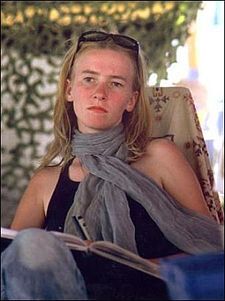
Rachel Corrie
Mes parents m'ont appris
Que la justice est une
Tout comme l'Homme
Et j'y ai cru
Ils m'ont appris aussi
Que le droit
Il faut aller le chercher
Dans les poèmes
Dans les rues
Et même devant les bulldozers de l'armée
Dans les territoires occupés
J'ai bien appris
Oui
Que l'Homme est indivisible
Tout comme la justice
2012-08-30#20.27
La Grotte
Il faut trois hommes pour la retenir
Un vieux
- Son frère ? -
Et deux jeunes hommes
Et la grand-mère rugit comme une vieille lionne blessée
Dont on a dévoré les lionceaux
Elle libère un bras
L’approche de son visage
Et un filet de sang coule le long de sa joue droite
Ridée comme sa terre
Il y a deux heures
Que l’armée a déclaré l’arrêt des hostilités
Il y a deux heures que les bombes ont cessé de tomber
On aide la grand-mère à avancer entre les ruines
Pour approcher de sa tanière
Son ex-toit
A cent pas de là
De l’autre côté de l’ex-route
Deux jeunes filles s’affairent
A replanter un olivier arraché
A moitié brûlé
Qui a tout vu
2009-01-20#00.34
Le Nid
A Patima Zakka
la maman de Yusef
né en prison.
Le docteur fut une doctoresse.
Elle a besoin d’anesthésie, Docteur! Elle n'en peut plus!
Ne vous inquiétez pas!
Elle y arrivera !
Elle n'aura pas le choix!
Mais ce n'est pas …
Elle avait l'intention de nous faire sauter tous
Et le bâtard qui sortira de son ventre
Le fera sûrement un jour.
Non ma chère!
Elle n'aura pas d’anesthésie.
2012-05-11#16,42
La Grotte
A Jenine
Après la victoire
rentrant à la maison
les braves soldats
ont cassé tous les miroirs
pour éviter le regard du dernier témoin
2002-05-03#23.33
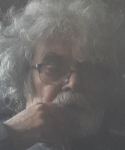
Reza Hiwa est un poète, né à Téhéran en 1955 de parents kurdes immigrés dans un quartier ouvrier de Téhéran. Il grandit comme un immigré chez lui, obligé de cacher qu’ils étaient kurdes et que ses parents étaient sunnites. Il vit sa jeunesse dans ce quartier où se mélange la mosaïque ethnique du pays. La misère pousse toujours les laissés-pour-compte des provinces vers les métropoles.
Il entre à l'université pour réaliser le rêve des parents et devenir ingénieur, le symbole de la réussite sociale. Mais il a la tête ailleurs. La veille des examens, il dévore Beethoven, Marx et Hugo, et au lieu d’étudier la résistance des matériaux, il pense à une autre résistance.
Il se bagarre contre le régime du Chah, puis contre la République qu’il considère répressive. Le voilà en France, père de trois enfants. Un autre cadeau de la vie lui fait parcourir l’Europe.
Il prétend être un poète. Si vous le croisez un jour, ne le contredisez pas.
Il trouve enfin son livre fétiche, l’Homme, qu’il lit avec boulimie. Il préfère les conversations sur un sentier aux débats idéologiques .
Il dit qu’il est né pour semer. Semer même quand tout porte à croire qu’il est seul, isolé et marginal. Semer malgré la sécheresse et l’inondation. Il croit à la puissance des mots. Il s’en méfie et il les sème. Les mots l’ont changé tant de fois dans sa vie.
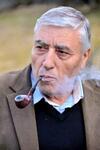
Nabil Anani (né 1943, Latroun, Palestine) est un des artistes palestiniens les plus importants en vie aujourd'hui. Il est considéré par beaucoup comme un fondateur clé du mouvement contemporain de l'art palestinien.
En 1969, après avoir fini ses études avec succès à l'Ecole des Beaux Arts de l'Université d'Alexandrie en Egypte, Anani est retourné en Palestine pour entamer une riche carrière comme artiste et enseignant des formateurs dans un collège de l'ONU à Ramallah. Anani a tenu sa première exposition à Jérusalem en 1972 et depuis a exposé largement dans des endroits comme l'Europe, l'Amérique du Nord, le Moyen Orient, l'Afrique du Nord, le Japon, à la fois comme artiste, individuellement, ou bien en groupe et accompagné de ses contemporains en Palestine.
Anani est un artiste polyvalent: il est en même temps un peintre, un céramiste et un sculpteur. Il a été l'avant-garde dans l'usage des matériaux locaux comme le cuir, le henné, le papier-mâché, le bois,le cuivre. Pendant les quatre dernières décennies Anani a produit un catalogue artistique exceptionnel, innovant et unique.
Anani a obtenu le premier Prix National Palestinien pour l'Art Visuel en 1997 et un an après en 1999 a pris la charge de la Ligue Palestinienne des Artistes. Depuis sa retraite en qualité d'enseignant en 2003, Nabil a consacré beaucoup de son temps comme volontaire pour gérer les activités de la Ligue et a joué un rôle clé dans la mise en place de la première [Académie Internationale des Beaux Arts en Palestine](http://www.artacademy.ps) (Avec le soutien de l'Université d'Oslo et le Ministère des Affaires Etrangères de Norvège)
--- [Pour mieux connaître Nabil...](http://www.nabilanani.net)